Boost your engagement: your simple guide to generating trackable QR codes
You've launched a new print campaign. You've placed QR codes on posters, flyers, and direct mail, hoping to bridge the gap between your physical and digital worlds. But a crucial question remains: is anyone actually scanning them? And if they are, who are they, where are they, and what does it mean for your ROI?
For too many marketers, QR codes are a data black hole. You send them out into the world and hope for the best, with no way to measure their true impact or justify the investment. This isn't just a missed opportunity; it's a critical blind spot in an otherwise data-driven strategy.
This guide will change that. We're not going to explain the basics of creating a QR code. Instead, we'll dive straight into the strategic value of tracking them. You'll learn how to transform that simple black-and-white square from a passive link into an active source of business intelligence that proves your campaign's worth.
Static vs. Dynamic: Moving from a Data Void to Actionable Insight
The root of the tracking problem lies in the type of QR code you're using. A traditional, static QR code is nothing more than a digital shortcut. It's a one-way ticket to a URL, and once printed, it's set in stone.
This presents several critical limitations for any serious marketing campaign:
It's Unmeasurable: You have no way of knowing how many people scanned it, let alone how many were unique visitors. Every scan is anonymous and untraceable, leaving you to guess about engagement.
It's Inflexible: A typo in the destination URL? A campaign landing page that needs updating? With a static code, your only option is to reprint everything. It's a permanent link to a single destination, turning your marketing materials into a potential sunk cost.
It Offers Zero Audience Insight: You learn nothing about your audience. You don't know if they are scanning your materials in London or Los Angeles, on an iPhone or an Android, in the morning or late at night.
This lack of data is the defining feature of a static QR code. If you're looking for a deeper dive into the fundamental differences between code types, our The Ultimate Guide to Generating QR Codes covers all the basics.
But for marketers who need to prove ROI, the solution is to use a dynamic, or trackable, QR code. This is where your QR code starts talking back, providing a complete report on its own performance.
Unlocking Business Intelligence: The Anatomy of a Trackable QR Code Dashboard
So, what transforms a simple QR code into a data-gathering powerhouse? The answer is a dynamic redirect. Instead of pointing directly to your website, a trackable QR code directs the user to a unique, short URL that records critical analytics in a fraction of a second before seamlessly sending them to their final destination. The user notices nothing, but you gain everything.
This process populates an analytics dashboard with the actionable intelligence you need to evaluate and optimize your campaigns. Here’s a breakdown of what you can measure and why it matters.
1. Core Engagement & Performance Metrics
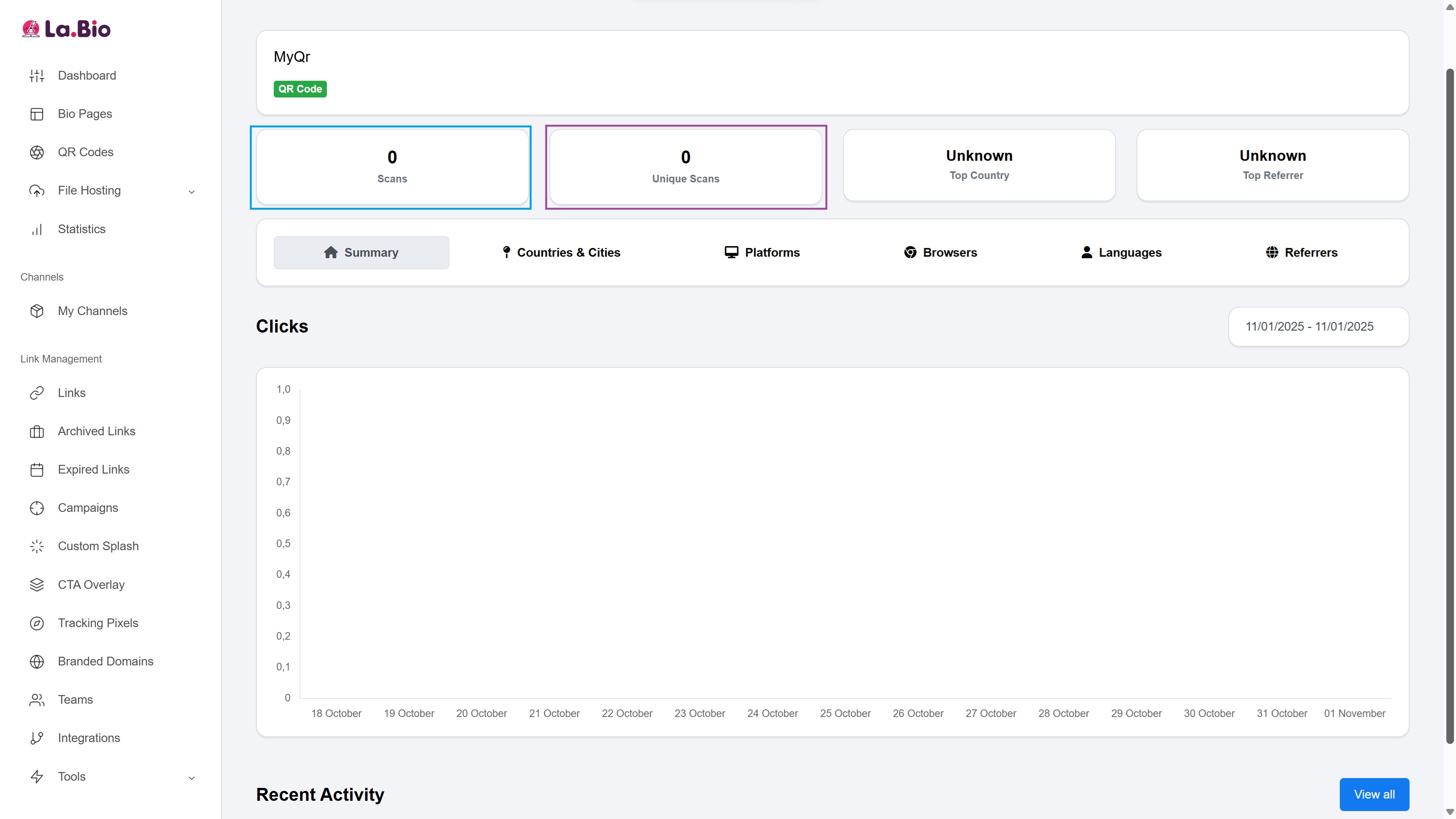
This is your high-level view of campaign health, answering the most fundamental question: "Is my campaign getting noticed?"
Total Scans vs. Unique Scans: This is the first layer of insight. "Total Scans" measures overall interactions, while "Unique Scans" reveals your true audience size. A high ratio of total scans to unique users can signal a highly engaged audience that returns to your content.
Scan Data Over Time: Your dashboard's timeline graph isn't just a pretty chart; it's a tool for identifying peak engagement. Are you seeing spikes after a specific event, on certain days of the week, or at particular times? Use this insight to schedule future promotions and optimize ad placements for maximum visibility.
2. Deep Audience Demographics
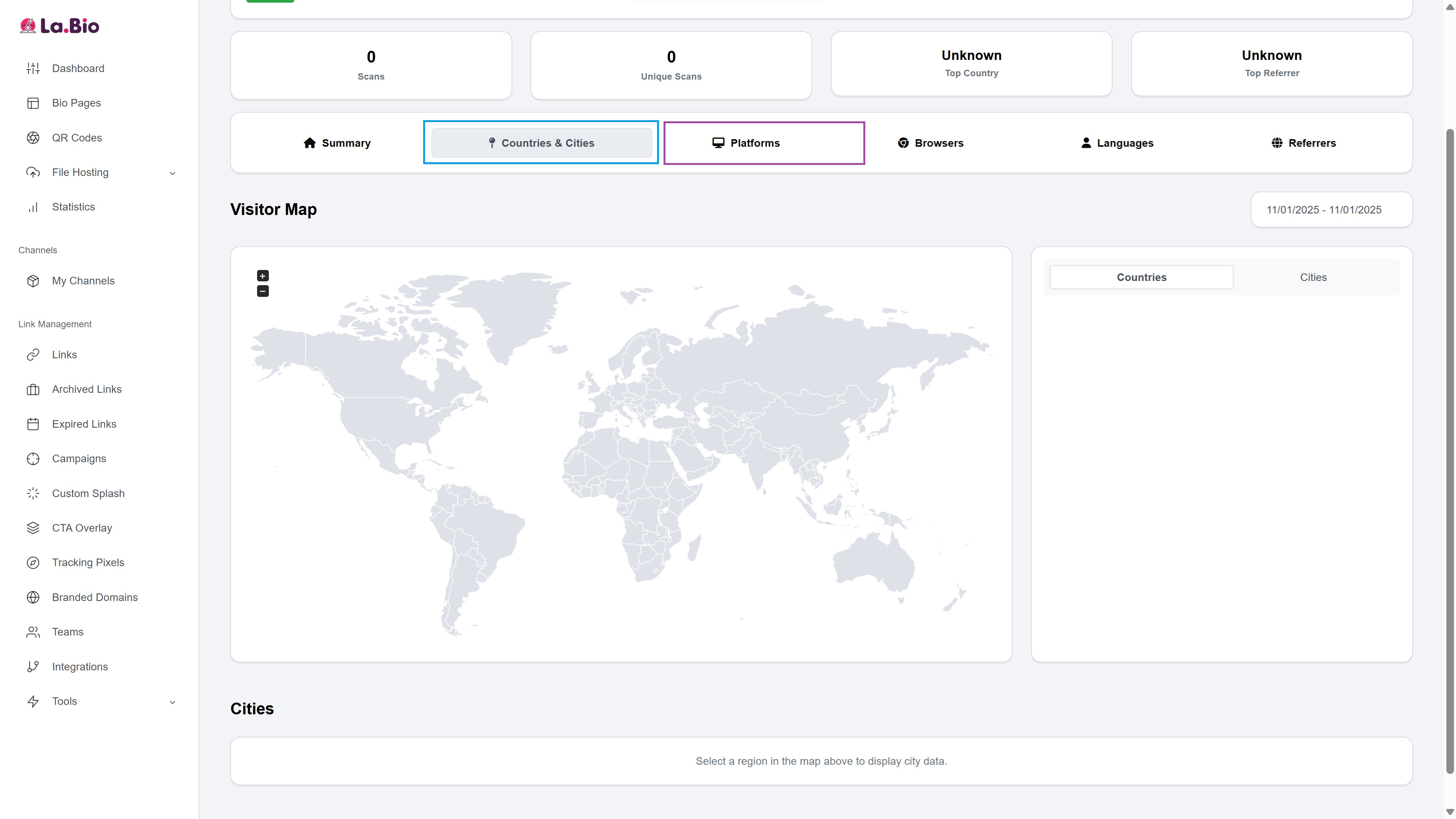
Beyond the numbers, this is where you build a clear profile of who is engaging with your brand offline.
Geographic Data (Country & City): Pinpoint exactly where your scans are happening. This is invaluable for validating the reach of a direct mail campaign, identifying surprise geographic markets, or tailoring regional marketing efforts.
Platforms & Browsers: Is your audience primarily on iOS or Android? Do they use Chrome or Safari? This data is critical for your web development team to ensure landing pages are perfectly optimized for the user's device, preventing drop-offs caused by a poor technical experience.
Putting Data into Action: 4 Ways to Optimize Your Marketing with QR Code Analytics
Having access to a powerful analytics dashboard is only the first step. The real value comes from using that intelligence to make smarter, faster, and more profitable marketing decisions. Here are four practical strategies you can implement immediately.
1. A/B Test Your Physical Media and Placements
You wouldn't run a digital ad campaign without A/B testing your creative and copy, so why should your offline materials be any different? By creating a unique trackable QR code for each variation, you can finally measure the real-world performance of your physical assets.
Scenario: A restaurant wants to know if customers are more likely to scan a QR code on a table tent or on the printed menu itself.
Action: Assign a different trackable code to each placement.
Insight: After a week, the dashboard reveals that the menu's QR code receives five times more scans. This data provides a clear mandate to make the menu the primary location for all future QR code promotions, optimizing for proven customer behavior.
2. Refine and Personalize the Customer Journey
Your audience isn't a monolith, and your QR code data can help you create a more tailored post-scan experience. Use the device and location data to remove friction and increase conversion rates.
Scenario: A retail company's event poster is generating significant scans in New York and Chicago. The dashboard shows 80% of these scans are from iPhone users.
Action: They ensure the campaign's landing page is perfectly optimized for Safari on iOS.
Insight & Next Step: They can take it a step further by using the geographic data to dynamically display a location-specific offer on the landing page (e.g., "Visit our SoHo store today for 10% off!"). This level of personalization, driven by scan data, can dramatically lift conversions.
3. Justify Marketing Spend with Definitive Attribution
This is the ultimate goal for any data-driven marketer: proving what works. Trackable QR codes are one of the most effective tools for attributing offline actions to digital results.
Scenario: You've invested in both a trade show sponsorship and a print ad in an industry magazine, placing a unique QR code on each.
Action: At the end of the campaign, you compare the scan data for each code in your dashboard.
Insight: The report clearly shows the trade show banner generated 500 unique scans and led to 75 sign-ups, while the magazine ad only produced 30 scans. You now have concrete data to justify shifting more of your budget toward live events in the next fiscal quarter.
4. Validate Distribution and Discover New Markets
How can you be sure your expensive direct mail or flyer campaign reached its intended audience? Your QR code's geographic data provides the proof.
Scenario: A real estate agency sends out 10,000 flyers to two specific zip codes.
Action: They monitor their analytics dashboard for scan locations.
Insight: They see a high concentration of scans from the target neighborhoods, validating that their distribution partner was effective. Even better, they notice a small but significant cluster of scans from a neighboring, affluent area they hadn't considered, revealing a new, unexpected market to target next.
Stop Marketing Blind. Get the Data You Need. Create Your First Free Trackable QR Code Today!
Conclusion: Turn Scans into Strategic Actions
Trackable QR codes are more than just a convenient link between the physical and digital worlds; they are a vital source of business intelligence. They eliminate the guesswork from your offline campaigns, replacing ambiguity with concrete data on reach, engagement, and audience behavior.
By leveraging the insights from a dynamic QR code dashboard, you can finally connect your offline efforts to tangible business outcomes. The power to A/B test your print materials, personalize the customer journey, and definitively prove your marketing ROI is no longer a luxury—it's just one scan away.